

Service Details

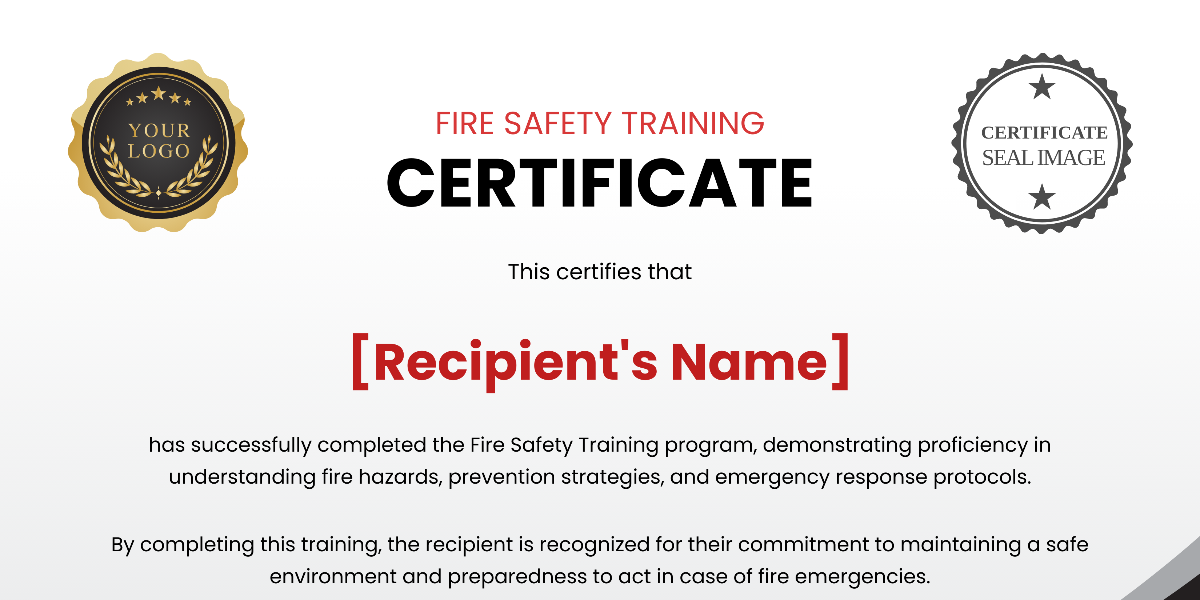
Fire certificate

Fire Certificate Overview

Fire Certificate, also known as a Fire Safety Certificate (FSC), is an official document issued by the local fire department or fire safety authority certifying that a building or premises complies with all necessary fire safety regulations and standards. This certification ensures that adequate fire prevention and safety measures are in place to protect occupants and property from fire hazards. Obtaining a Fire Certificate is mandatory for various types of buildings, including commercial establishments, residential complexes, educational institutions, hospitals, and industrial facilities.

Benefits of Obtaining a Fire Certificate

Ensures adherence to local and national fire safety regulations, helping avoid legal penalties and closures.
Confirms that the building has proper fire safety measures, reducing the risk of fire incidents and ensuring the safety of occupants.
Facilitates smoother insurance claims and may result in lower insurance premiums due to reduced risk.
Demonstrates a commitment to safety standards, enhancing the reputation and trustworthiness of the establishment.
Minimises the potential for fire-related disruptions, ensuring uninterrupted business operations.
Identifies and addresses potential fire hazards proactively, preventing costly damages and losses.
Reassures customers, clients, and visitors that the premises are safe and well-maintained.

Documents Required for Fire Certificate Application

Duly filled and signed application form prescribed by the local fire department
  • Site Plan : Detailing the location and surroundings of the building.
  • Floor Plans : Showing detailed layouts of each floor, including exits, staircases, and occupancy details.
  •  Sectional Drawings : Illustrating vertical sections of the building.
  •  Elevation Drawings : Showing the exterior views of the building.
  • Fire Detection and Alarm Systems: Specifications and installation details.
  • Fire Fighting Equipment: Types, quantities, and locations of extinguishers, hoses, sprinklers, etc.
  • Emergency Lighting and Signage: Placement and specifications.
  • Evacuation Plans: Detailed procedures and routes
Issued by a qualified structural engineer certifying the building’s integrity.

Issued by a certified electrician or electrical inspector.

No Objection Certificates from municipal or local bodies, if applicable
Proof that the building is approved for its intended use.
If applicable, reports from prior inspections or audits.
Recent photographs of the building’s interior and exterior, highlighting fire safety installations.
Of the building owner or authorised representative. 11. Proof of Payment: Receipts showing payment of application and inspection fees.
Receipts showing payment of application and inspection fees.
List of responsible persons with contact information in case of emergencies.

Steps to Obtain a Fire Certificate

  • Conduct Internal Audit: Evaluate the current fire safety measures in place and identify areas for improvement.
  • Consult Professionals: Engage fire safety consultants or engineers to ensure compliance with all relevant regulations and standards.
  • Implement Necessary Systems: Install or upgrade fire detection, alarm, and
    suppression systems as required.
  •  Ensure Proper Signage and Exits: Install clear emergency exit signs and ensure all
    escape routes are unobstructed.
  • Conduct Training: Train staff and occupants on fire safety protocols and emergency
    response procedures.
  • Gather All Necessary Documents: Compile all required plans, certificates, and proofs as outlined by the local fire authority.
  • Complete Application Form: Fill out the application form accurately with all relevant details.
  • Visit Local Fire Department: Submit the application along with all supporting
    documents to the designated fire safety office.
  • Pay Applicable Fees: Complete the payment of any application or inspection fees as
    required.
  • Schedule Inspection: Coordinate with the fire department to schedule an on-site inspection of the premises.
  • Facilitate Inspection Process: Ensure that inspectors have access to all areas and provide any additional information they may require.
  • Address Observations: If inspectors note any deficiencies, take corrective actions promptly and schedule follow-up inspections as needed.
  • Approval and Issuance: Upon successful inspection and compliance with all requirements, the fire department will issue the Fire Certificate.
  • Display Certificate: Prominently display the certificate within the premises as proof of compliance.
  • Maintain Safety Standards: Regularly inspect and maintain all fire safety equipment and systems.
  • Renew Certificate: Adhere to renewal timelines as specified by the authorities, submitting updated documentation and undergoing periodic inspections.

FAQs

Common Questions About Our Consulting Services

Is a Fire Certificate mandatory for all types of buildings?

Yes, obtaining a Fire Certificate is mandatory for most commercial, industrial, and high-occupancy residential buildings. The specific requirements may vary based on local regulations and the building's size and purpose.

The validity period of a Fire Certificate varies by jurisdiction but typically ranges from 1 to 3 years. Renewal requires re-inspection and verification that all fire safety measures are maintained.

Operating without a valid Fire Certificate can lead to legal penalties, including fines, closure of the premises, and potential criminal charges in case of fire incidents resulting in harm or damage.

The processing time can vary but generally takes between 15 to 30 days from the date of application, provided all requirements are met, and no significant deficiencies are found during inspection.

Many jurisdictions offer online application facilities through official government portals. Check with your local fire department or municipal authority for available online services.